What Every DTC Brand Can Learn from Dude Wipes’ $220M Climb
In June 2025, Dude Wipes closed a private equity deal with TSG Consumer Partners—and it’s not just a “funny brand gets funding” headline. It’s a case study in how DTC operators can build sticky brands, scale into retail without bloating, and still hold onto the thing that made customers care in the first place.
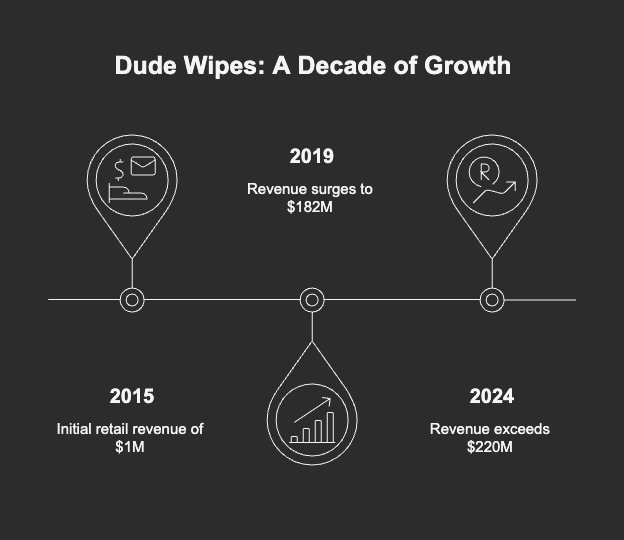
They didn’t raise on potential. They raised on receipts: $220M+ in retail sales, distribution in 25,000+ doors, and a household name built around bathroom humor.
Let’s unpack the actual strategy.
From Frat House to National Retail
The founding story isn’t cute. It’s gritty.
In 2011, three college friends in Chicago had $30k and a hot take: toilet paper sucks. They started handing out flushable wipes at tailgates and music festivals. In 2015, they pitched Shark Tank, where Mark Cuban told them their idea was “ridiculous”—right before investing $300,000 for 25% equity.
Fast forward: Dude Wipes is now one of Cuban’s best-performing portfolio companies. They bootstrapped through 2016, hit Kroger shelves by 2019, and never lost money along the way (Forbes).
This wasn’t a DTC-to-target pipeline. It was a retail-first grind built on retail velocity.
Marketing That Smells Like… Personality
Dude Wipes made a category people didn’t want to talk about—and forced them to laugh instead.
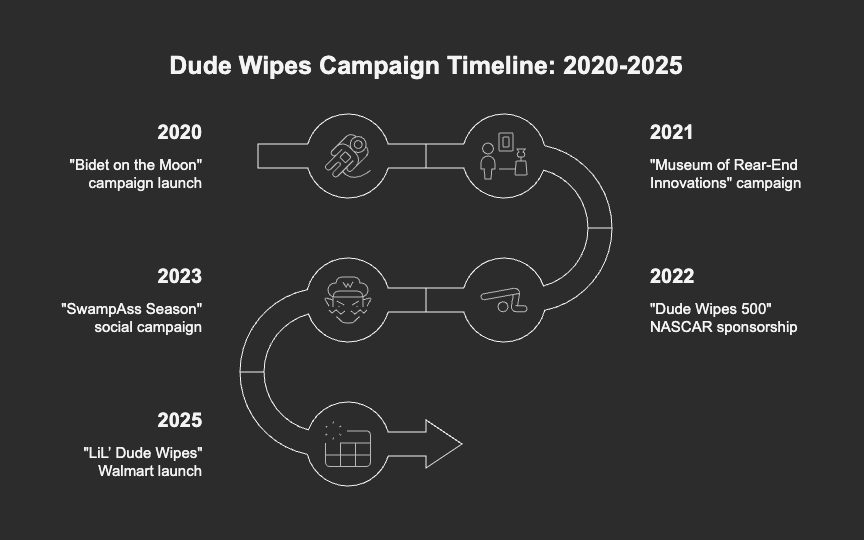
They didn’t test ad copy. They crash-tested culture. That includes:
- A fake “Bidet on the Moon” campaign
- The “Museum of Rear-End Innovations” ad spot
- And sponsoring the “Dude Wipes 500” NASCAR race (LBBOnline)
“If you're going to convince people to wipe differently, you'd better make them laugh.”
— Ryan Meegan, CMO (Marketing Dive)
They didn’t just go viral—they showed up in your feed. When NFL players had stomach issues? They mailed them wipes. When #SwampAss trended? They dropped into the comments.
They own the joke—and the shelf.
Omnichannel, But Make It Lean
Dude Wipes built the DTC trifecta:
- Early Shopify traction
- Strong repeat volume on Amazon
- Retail distribution now in 25,000+ stores, including Walmart, Target, CVS, and Sam’s Club (Retail Dive)
But they scaled retail without bloating:
- No in-house manufacturing—they use the same suppliers as the big guys
- Just 35 employees
- One core product, no runaway SKU creep (Nonwovens Industry)
Even their DTC site only makes up a fraction of revenue—Amazon and retail carry most of the load. Smart operators should take note: omnichannel doesn’t mean equal-channel.
So Why Did TSG Invest?
On June 25, TSG Consumer Partners took a minority stake. Terms weren’t disclosed, but the playbook is familiar: TSG helped scale Revolve, Stumptown, and Brew Dr. Kombucha.
“They believe we’re building a new category—not just riding one.”
— Jeff Klimkowski, CFO (TSG Consumer)
What the money unlocks:
- New products like LiL’ Dude Wipes (launched in June, exclusively at Walmart)
- Bigger ad campaigns—potentially Super Bowl territory
- Global expansion into markets where bidet culture meets disposable convenience
But the founders keep control. Cuban stays in. And the tone stays intact. As Klimkowski puts it, they’re not becoming “corporate wipes.”
Can They Stay Weird While Going Big?
That’s the billion-dollar question. Because Dude Wipes has competition now.
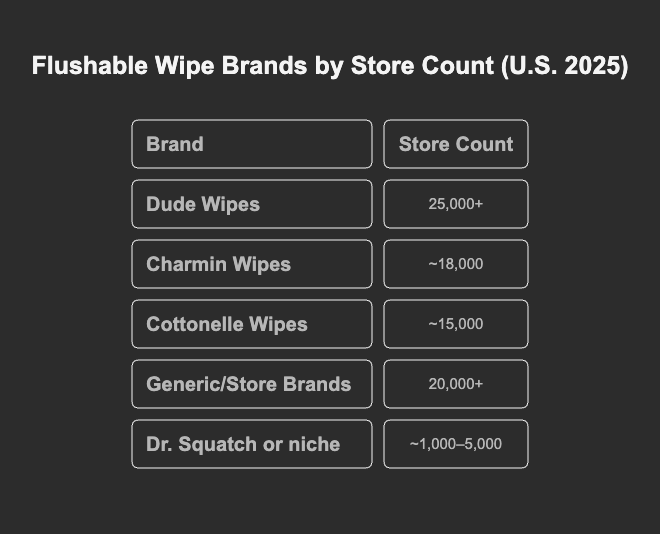
Charmin, Cottonelle, and store brands are cranking out “flushable” wipes with more budget and better shelf real estate. But here’s where Dude Wipes still wins:
- 35% larger wipes than competitors
- Packaging that doesn’t look like baby gear
- Loyalty through comedy and community
Still, they’ve got challenges:
- Flushability lawsuits: They settled a $9M suit over labeling in 2023 (TapTwice Digital).
- Sustainability pressure: With cities pushing for tighter regulation, “septic safe” claims will need real substance.
- Tone discipline: As CMO Meegan told Marketing Dive, “We’ve had to tone it down for TV”. There’s a line between edgy and off-putting.
The playbook? Keep innovating on product, stay honest about sustainability, and never lose the voice that built the base.
The Operator Takeaway
You don’t have to sell deodorant to the moon or start a poop museum. But there’s a real framework here:
- Own your tone
- Start lean and stay profitable
- Use DTC as your signal, retail as your scale
- Don’t be afraid to polarize—just don’t be forgettable
Dude Wipes didn’t just build a DTC brand. They built a brand with conviction, distribution, and repeatable habits.
Flush the buzzwords. This is what winning in CPG looks like in 2025.
Subscribe for weekly DTC insights.